How to Market a Chrome Extension: Data From 100+ Highest-Ranking Extensions
How to Market a Chrome Extension: Data From 100+ Highest-Ranking Extensions
How to Market a Chrome Extension: Data From 100+ Highest-Ranking Extensions
A detailed report on how to promote your chrome extension(s), drawing conclusions from the data of 100 most downloaded extensions
A detailed report on how to promote your chrome extension(s), drawing conclusions from the data of 100 most downloaded extensions

Adebayo Peter
Adebayo Peter
An industry report pointed out that 86% of extensions have under 1000 users. For the ones that do, they’re heavily backed by marketing budgets, or they’re strategic about it.
There are many ways they promoted their extensions, but one thing is for sure: they did not publish and pray.
This report tastefully peels off the nuances of how they promoted their extensions, drawing each conclusion from the data analyzed from 100 top-ranked Chrome extensions, with a combined 619 million downloads.
In particular, we answered some of the burning questions we’ve seen users ask on Reddit, Google, developer groups, and the entire internet.
How do I promote my extension without any marketing budget?
How do you get users and installs for your extensions?
We uncovered a number of stats, importantly, they are;
There is a correlation between updates and rank. A vast majority of the top-ranking extensions are updated regularly. In fact, 50% of them are updated within the past 60 days.
Authority matters now more than ever. 91% of the highest ranking extensions are either featured or from established publishers.
Visual richness is a common thread among winners: 67% of top-ranked extensions use at least 4 media items in their store listing.
Keywords and tags are still important as ever.
We found the webstore to use “slotting” to introduce new extensions to searchers. About 32% of the extensions in the top-10 results were slotted for newer extensions, while the other 68% remain in their positions. By “newer,`’ we don’t mean an extension that’s just published but a different extension.
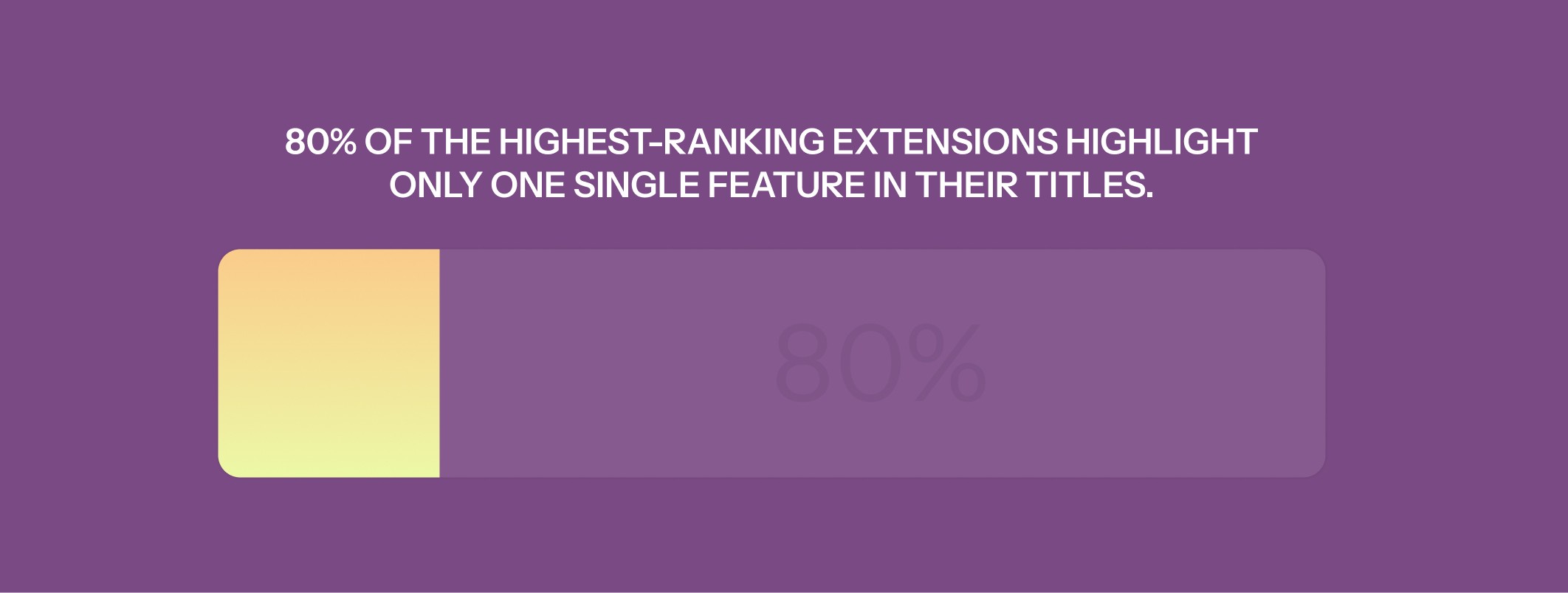
One “feature highlight” seems to work best. Our data recorded that 80% of the highest ranking extensions highlight only one single feature in their titles, even when their extensions can do more than that.
Long titles correlated with higher downloads. We found that extensions with 5 or more words in their titles account for 92% of the 618 million total downloads of the extensions in our data.
We have the extended explanation of these findings below.
Update correlates to rank on Chrome Webstore
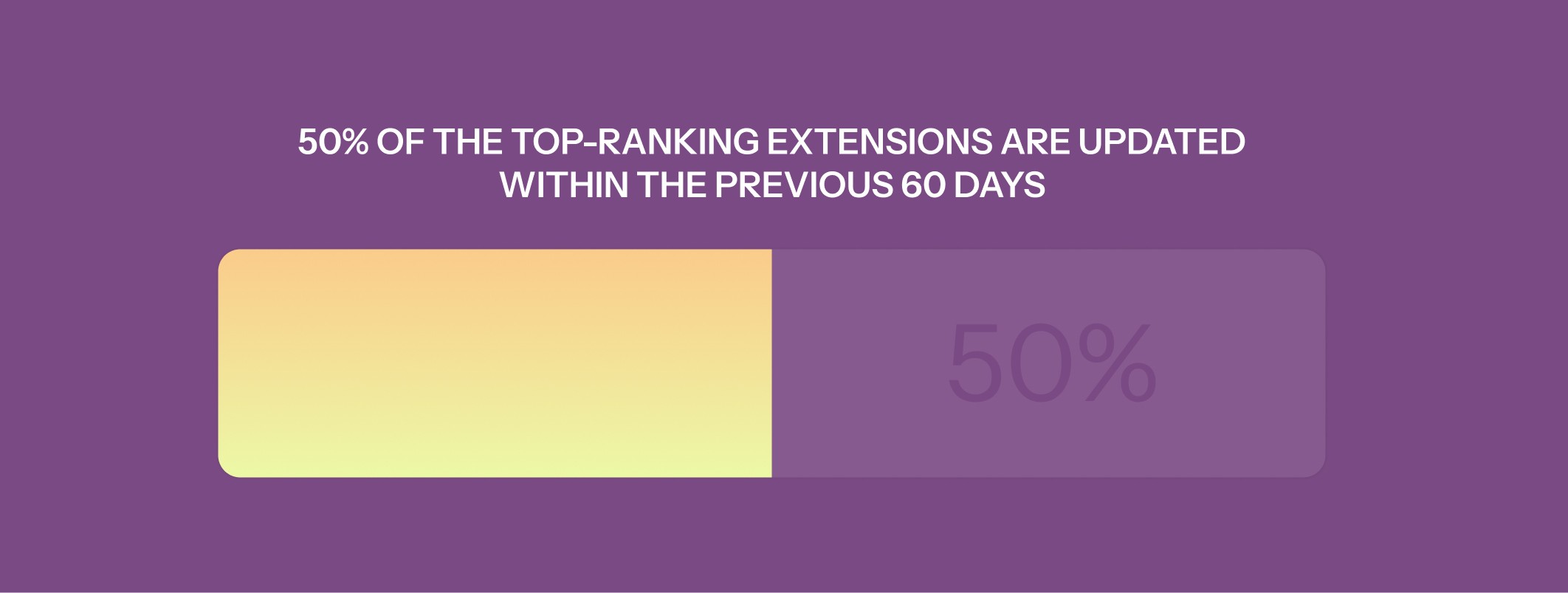
When it comes to ranking, refreshing your extensions with updates correlates to ranking in the top results. According to the data, we found that 50% of the top-ranking extensions are updated within the previous 60 days.
If anything is common knowledge, we know that Google loves updated content, videos, and this time, extensions.
To our knowledge, Google believes that the best extensions are the ones that take a look at their reviews, ratings, and draw some conclusions about what the users want and rectify accordingly.
This, by the way, doesn’t suggest updating your extension for updating's sake, but that you should develop an ongoing discipline of making your tool better every day.
Key Takeaway: Updates correlate with ranking priority. Specifically, 50% of the top-ranking extensions are updated within the previous 60 days.
The ideal extension is either "Featured" or from an "Established Publisher"
From our data, the highest ranking extensions invested not only in making their extensions but also in their identity.
According to what we found, 91% of top-ranking extensions have earned either a “Featured” or the “Established Publishers” badge.
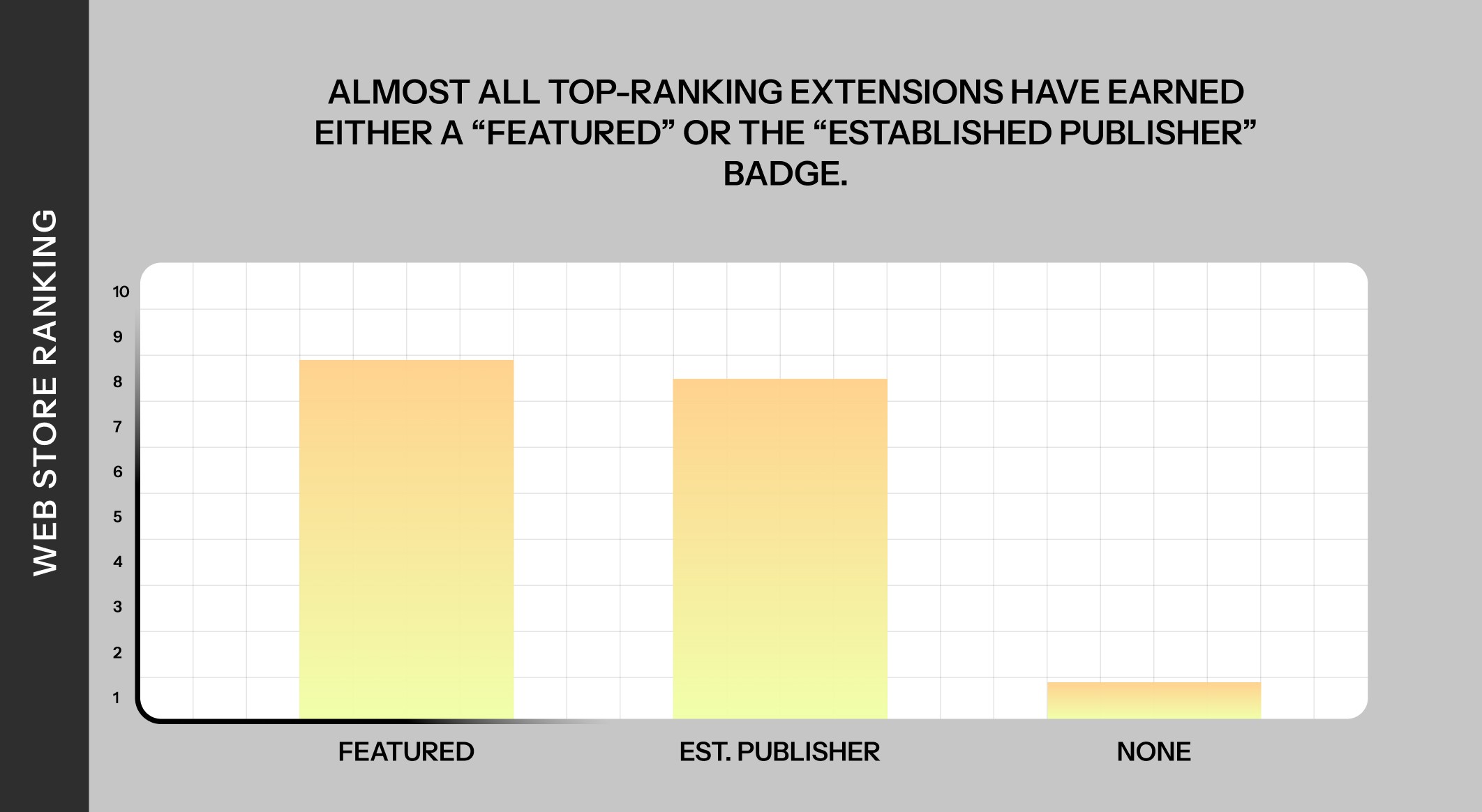
Either way, knowing you’re trusted by the Webstore Editors to be featured and be recognised as an established publisher increases your odds of ranking.
Why are these badges important?
We believe it’s a Google thing generally across all their product lines.
Google’s obsession with authority isn’t new. In fact, in their Search Rater Guideline, their internal rulebook for search, the concept of EAT (Expertise, Authoritativeness, Trustworthiness) is referenced more than 100 times.
That tells us how much quality they prefer across all their products, particularly when it comes to deciding what to rank on search.
Although only 9% of extensions in the top results are neither featured nor from established publishers, we would still advise that if you can’t get both the “Established Publisher" or “Featured” badge, try to get one.
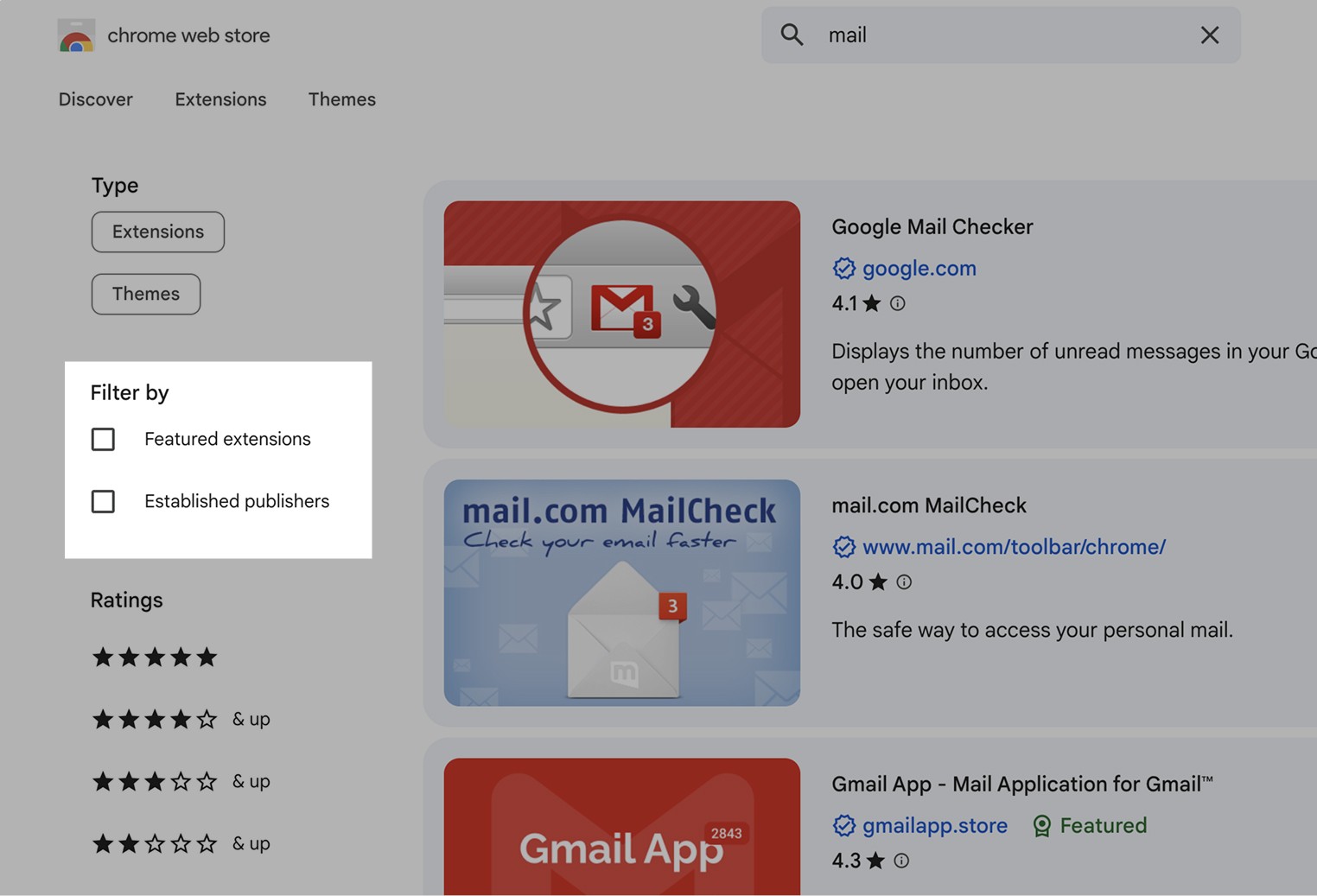
An “Established publisher” badge means the developer of the extension is established. The algorithm can trust the extension they made.
A “Featured” badge means that the extension has been vetted by Chrome’s own editors, and the algorithm can display it to more store browsers.
When you’re both, the webstore algorithm can fully trust you more.
Searchers can even filter their searches with either “featured” or “established publishers.” This also points to what they prioritize in search.
You can follow the steps below to become an established publisher:
Step 1: Adhere to all program policies, including developer terms of service and branding guidelines.
Step 2: Maintain a high-quality store listing with a clear description, high-resolution images, and a support URL. The recommended number of media items to use is five.
Step 3: Ensure a seamless user experience with an intuitive interface and high-quality performance.
Step 4: Use the latest extension manifest version (currently Manifest V3).
Step 5: Follow security best practices to ensure user data is protected and privacy disclosures are accurate.
Step 6: Submit your extension for a manual editorial review via the "Nominate your extension" form in the Chrome Web Store developer documentation.
Key Takeaway: 91% of the highest ranking extensions are either featured or from established publishers.
Visual richness correlates with more top-ranking
Our data found a correlation between visuals and the top-ranked extensions in searches. It points out that visual richness is a common thread among winners.
Specifically, 67% of top-ranked Chrome extensions used at least 4 media items in their store listing.
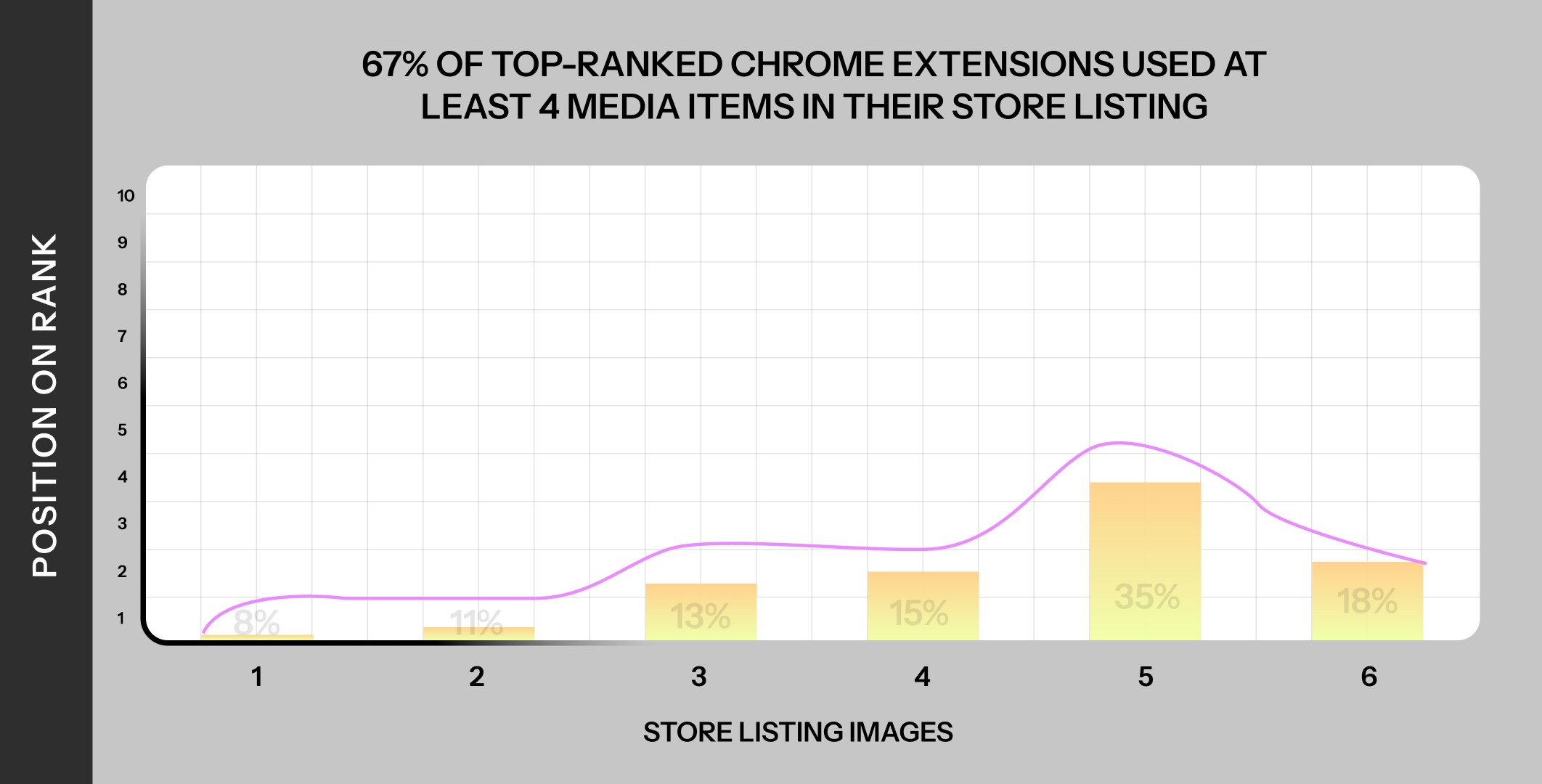
We could conclude from the data that the webstore algorithm understands that not all extensions are straightforward, and it prioritizes ones with extra layers of “explanation.”
We’d even go as far as saying your extension needs a whole written demo page on your own website showing your users what your extension is about, the setup routine, and what to expect to get out of it.
This might be a far jump for just an extension, but it helps increase CTR of your extension, reduce churns because the audiences already know what they will get out of it before checking it out, and it maintains a steady download velocity for your extension.
Many extension developers make the mistake of using a one-liner page to talk about what their extensions do. Like the image below.
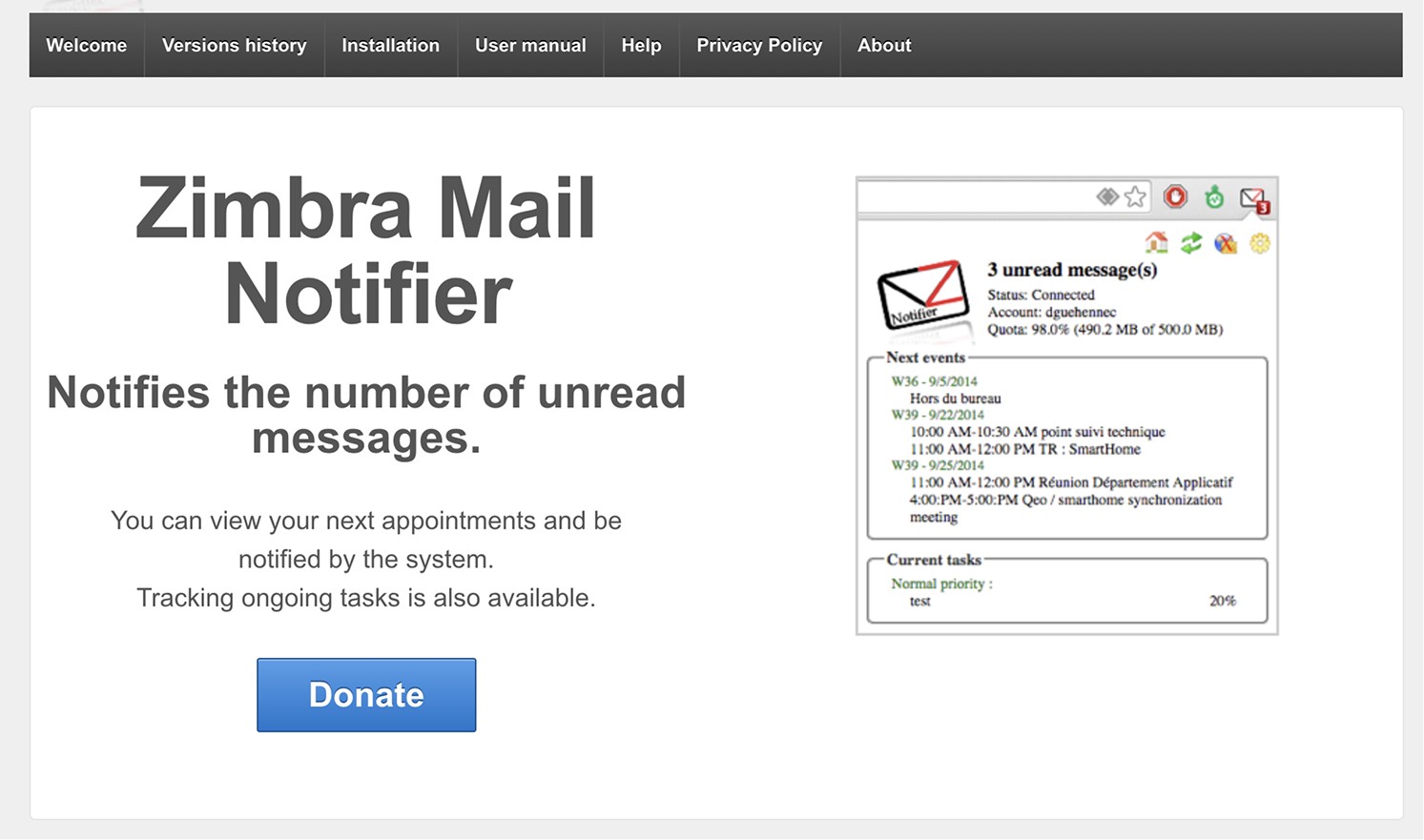
You want something like Ahrefs SEO Toolbar.
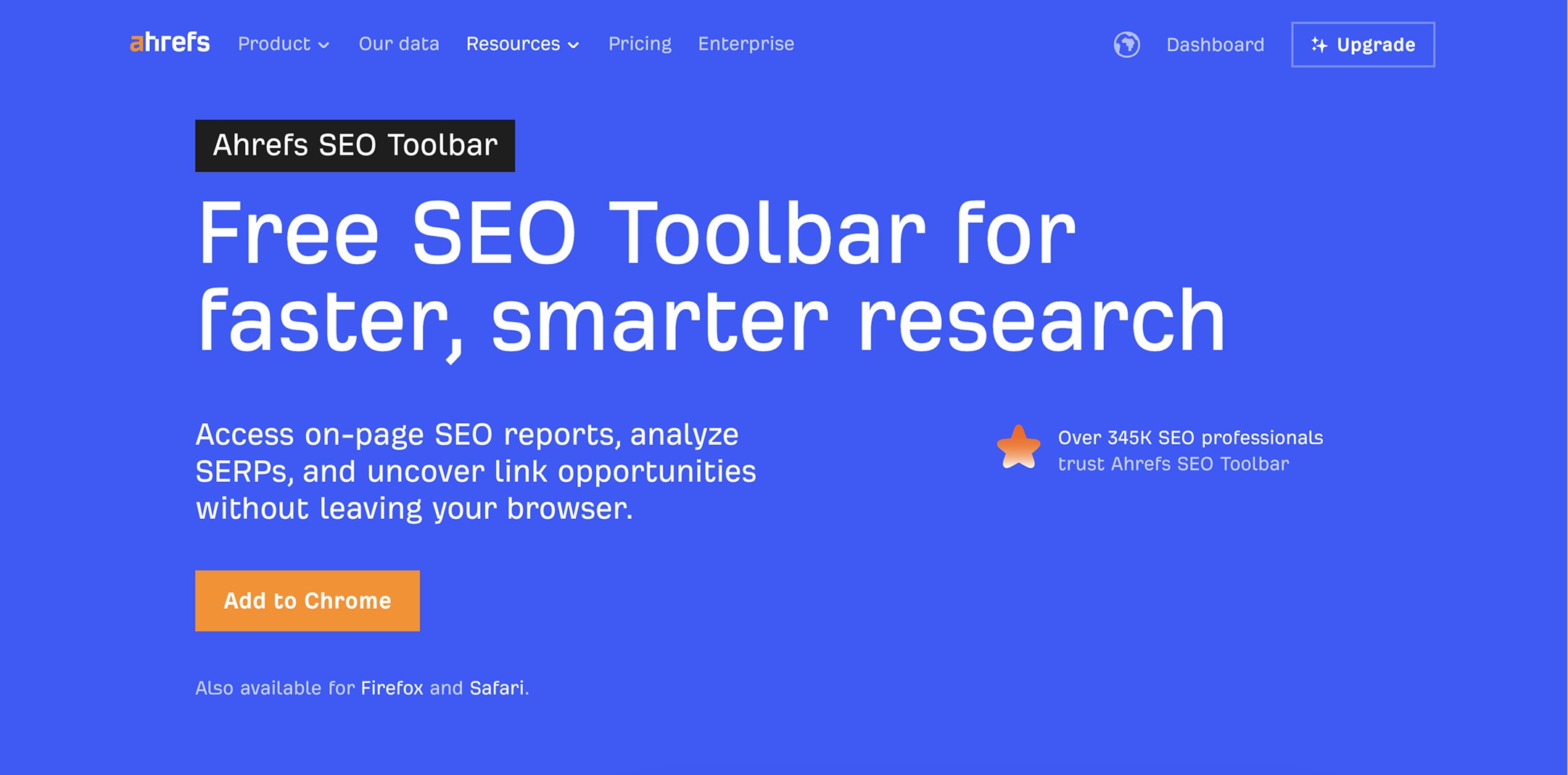
They have a dedicated page with about 700 words and 11 images explaining the extension, its strength and limitations. Over 400k users have added it to Chrome.
Pro Tip: Adding an explainer video to your extension also makes your extension a better candidate for more CTRs, more ranking, and overall perception in the face of the algorithm. Although we find no trace that video affects how much you rank, 28% of the top-ranking extensions use explainer videos in their media.
A simple screen record from your desktop, ideally, 30 seconds to 2 minutes, uploaded to YouTube would suffice.
Key Takeaway: Top-ranking extensions have, on average, 4+ images in their store listing.
Keywords, like always, are still relevant
There’s still a direct correlation between keywords and ranking on the Chrome Web Store. While there are no definite dos and don’ts and rules for keyword usage in your content on the webstore, all the extensions in our data are directly featuring their target keywords.
We’ll recommend using your main keyword in the first 4 words of your title.
Pro Tip: Adding “by” to your title also adds a bit of authority to your extension by default in the eyes of audiences. With a featured and established publisher badge and well-designed images to go on your store? There’s essentially no difference between you and Grammarly on the Chrome Web Store.
Key Takeaway: There’s a correlation between keywords and higher extension ranking on the Chrome Web Store.
A/B testing exists on the Chrome Webstore
We found that the ranking positions on the Chrome Web Store are volatile with no apparent reason. In our study, 68% of extensions remained in their positions on search, while 32% were replaced by “other” extensions.
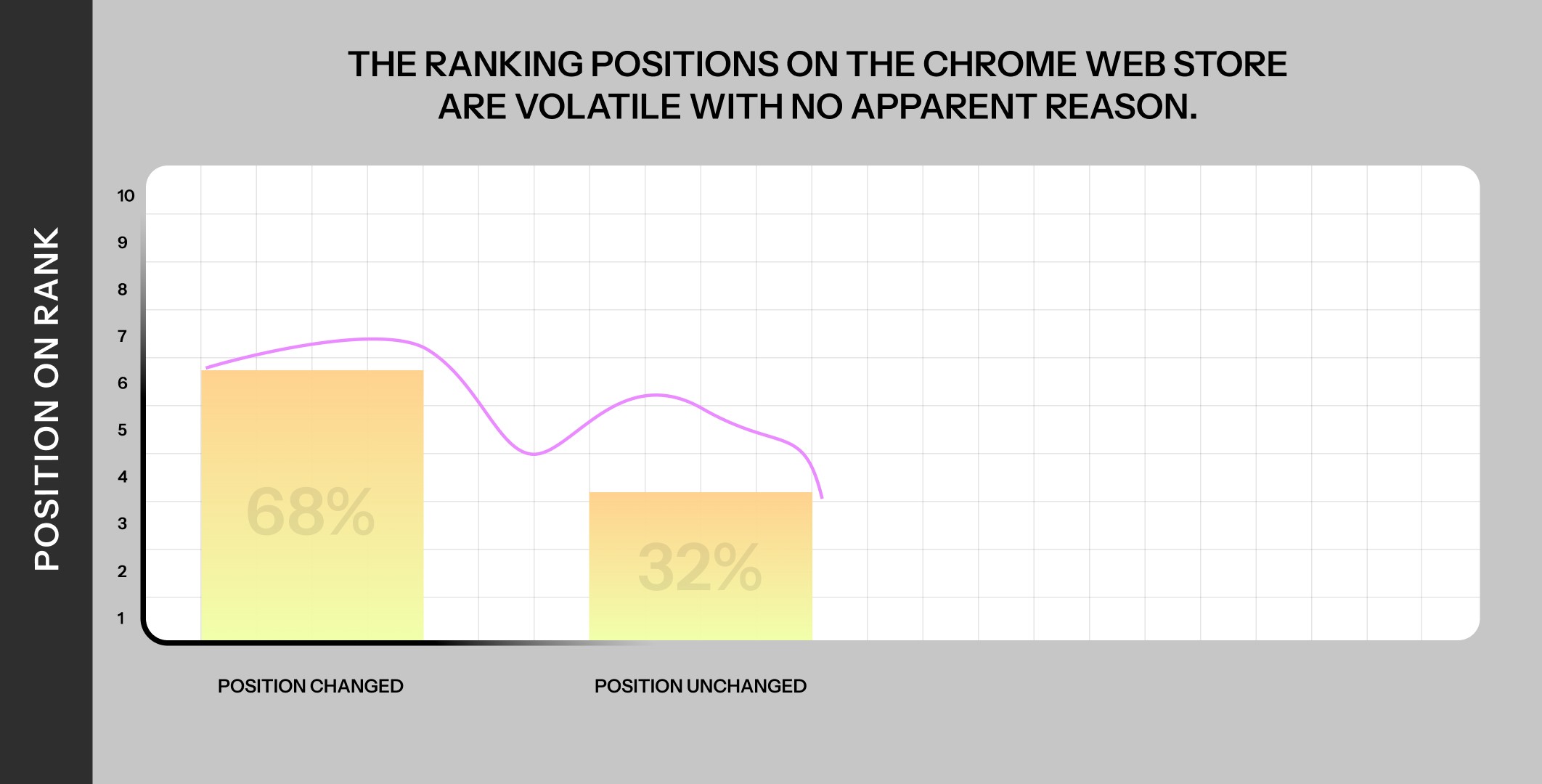
The top 3 ranked positions remained intact, while the bottom 3 extensions often get replaced with other extensions.
This happens after we originally pulled our data from the webstore a day earlier, and the next day, there are new additions to the top results. This kept on for the duration of creating this report.
There is no specific reason that we know of as to why this is, but if we’re to take a guess, it’d be that there are a lot of good extensions out there, and it’d be a disservice for the webstore to leave the ranking system unchanged.
So, according to our data, we assume the algorithm A/B test to prove which extensions should be ranked higher and which should be lowered in rank based on audience engagement.
Since there are no definite ranking factors for extensions, if the ones that are pushed to the top ranking get downloaded will remain on rank while extensions with little download will be lowered in rank and slotted for other extensions.
This might explain why the top three positions largely remained unchanged in this volatility, while the bottom three (positions 7-10) are often lowered in rank for other extensions.
This might even tell us the backend of the image below, where, with no promotion whatsoever, some developers may see a spike in their traffic and make a post on Reddit like below.
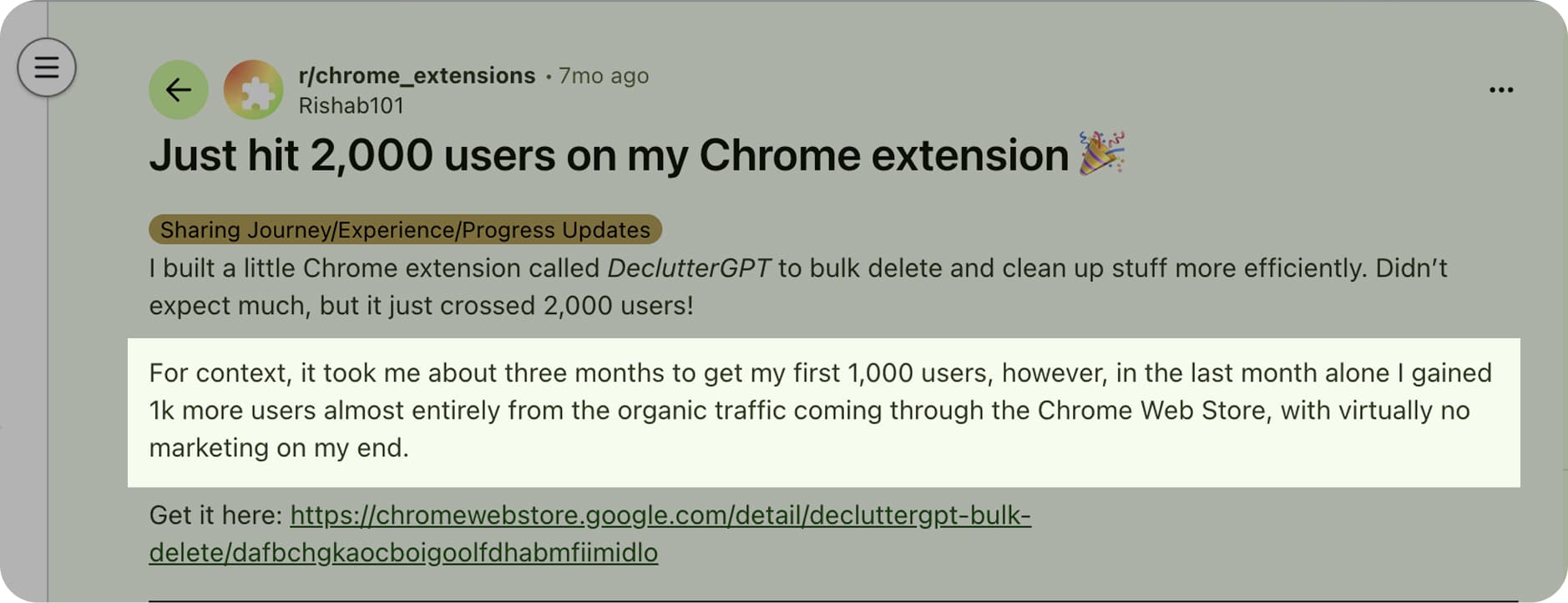
Key Takeaway: 32% of the extensions in the top 10 results are always replaced by other extensions on search regularly.
Extensions that highlight a single feature performs best
Mentioning only one feature in your title makes your extensions easy to skim, understand, and usable. According to our data, 80% of the highest ranking extensions highlight only one single feature in their titles.
After all, Google defines a Chrome extension “as a small software program…” You should keep it at that.
The era of combining everything your tool does into one small extension is long gone. Now, you need to make your extension a mini version of what your overall tool does. Your extension can not house the full suite of all your features.
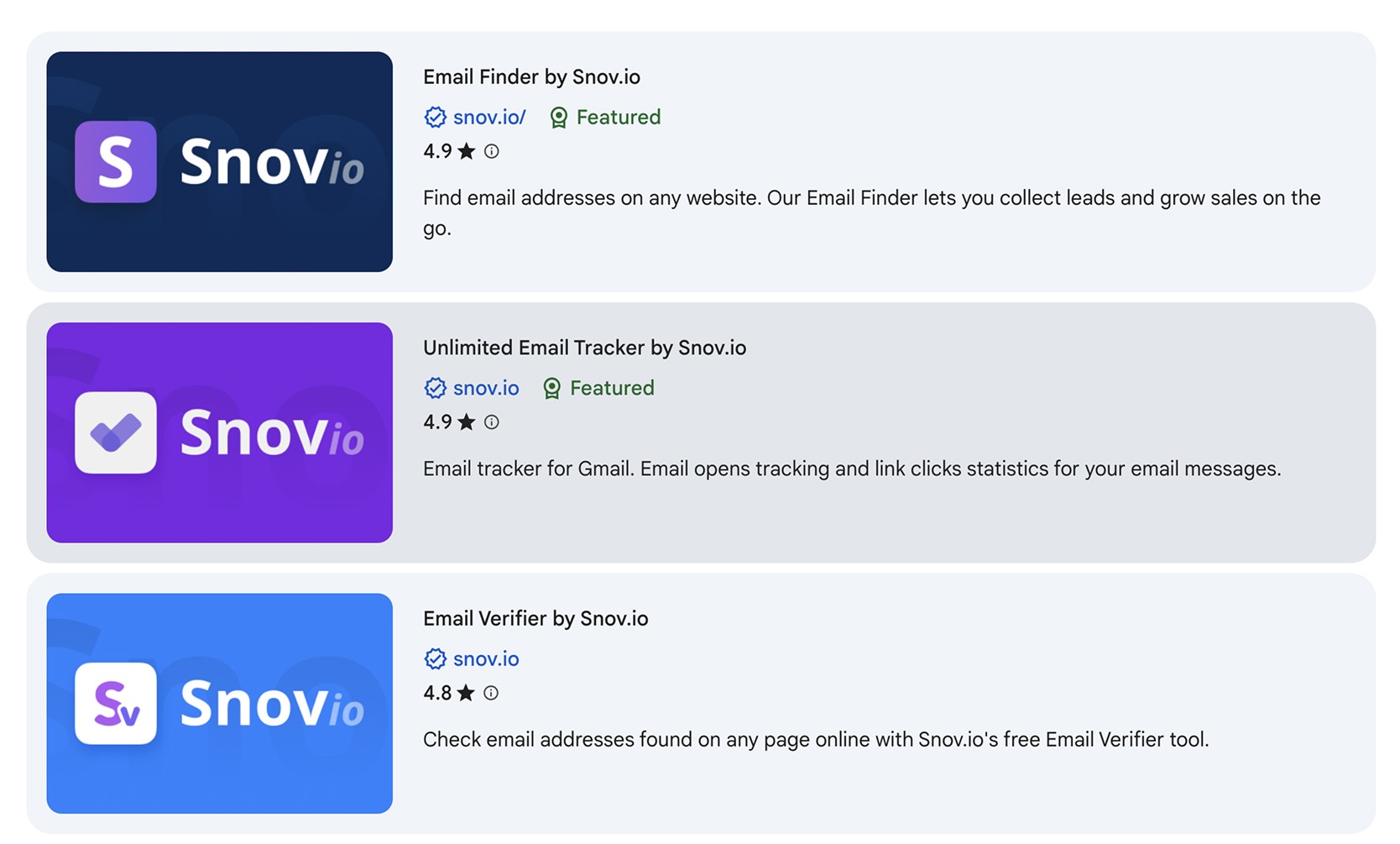
If your tool finds emails, tracks emails, and also verifies emails, while each of these features is related and can be embedded into one extension, it’s strategically better to name your extension after one single feature. Or, at most, only two features.
Or, if you’re like Snov, you can make three different extensions for each feature. Each ranking top three for all search intent, email finder, email tracker, and email verifier, with over 600k users combined.
We’re not suggesting creating different extensions for every feature of your tool. But to avoid ambiguity, let your title highlight one feature, or at most, two.
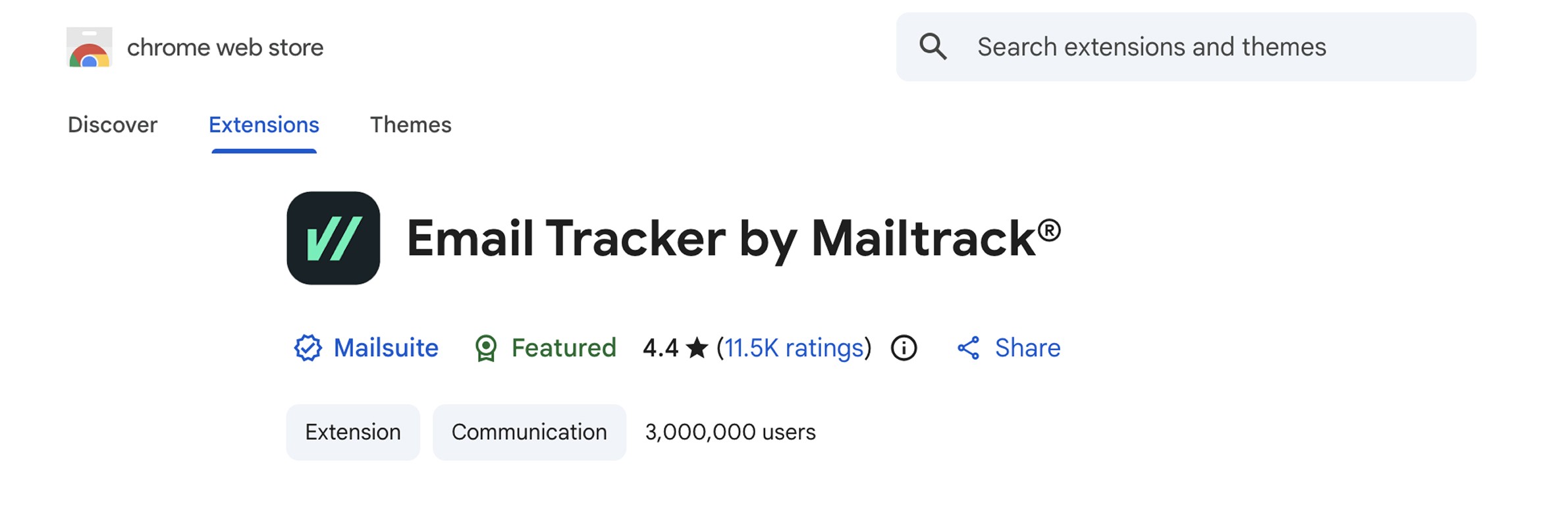
MailTrack - tracks mail in your Gmail. Although the main tool offers gmail follow up, AI suggestions, and more, the extension is simply targeted to track sent emails in your Gmail.
Key Takeaway: 80% of the highest ranking extensions highlight only one single feature in their titles.
Long titles are correlated with high levels of ranking and downloads
Many industry studies have found correlations between short and long headlines. Our findings also found something similar, but this time, that longer titles correlate with higher downloads.
From our data, we found that extensions with five or more words in their titles account for 92% of the 618 million total downloads.
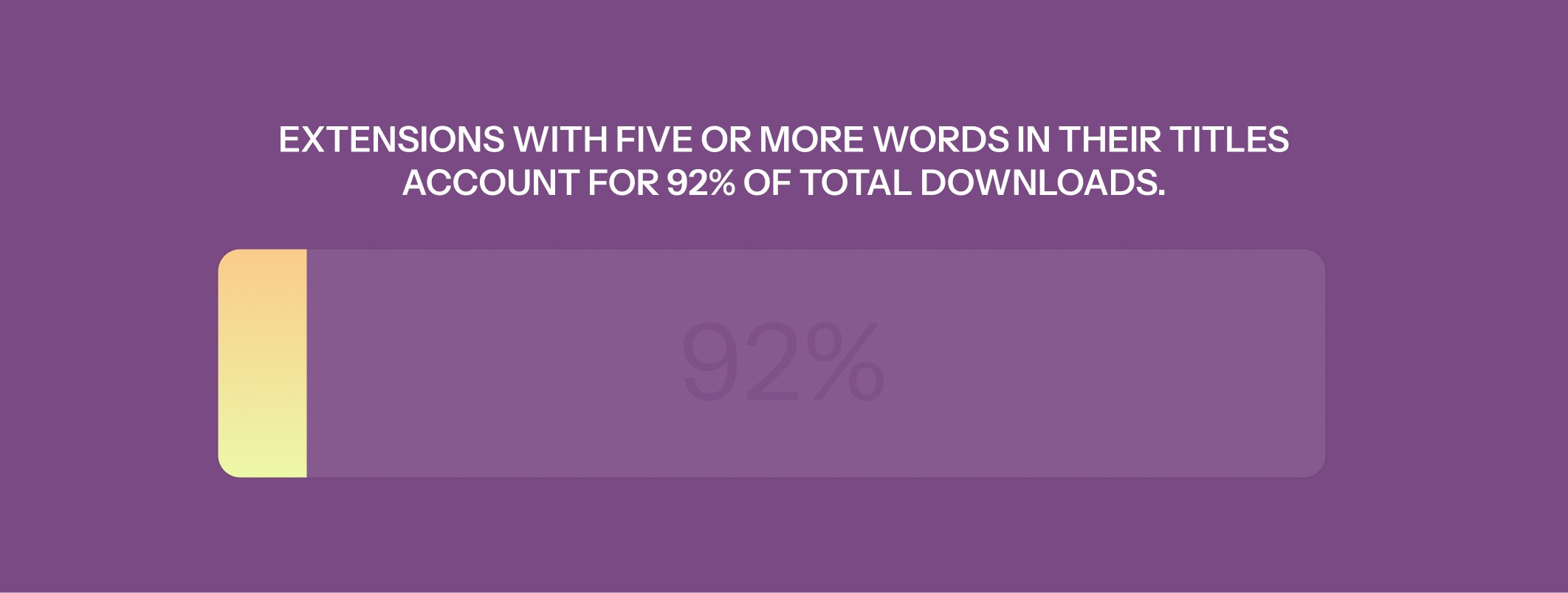
We define `’longer” with titles with more than 5 words.
As you have seen from the chart above, longer titles can capture more search intent, and particularly, add a layer of credibility to extensions for those who use their brand name.
Examples are Adobe, Grammarly, Snov, Hunter, Apollo, etc.
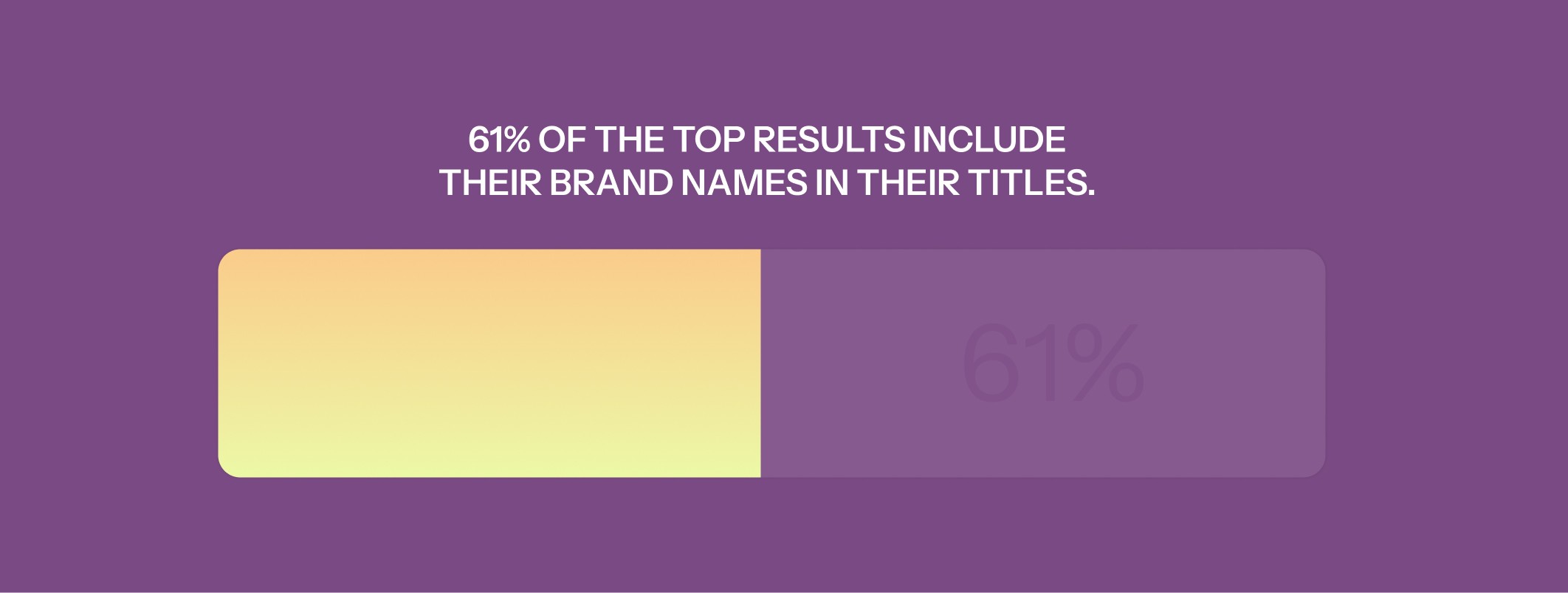
There’s no direct correlation between brand names and downloads, but according to the data, we were able to conclude that 61% of the top results include their brand names in their titles.
Key Takeaway: 92% of the highest download extensions have 5 or more words in their titles.
Conclusion
I learned a lot about Chrome Web Store and how it works from this study and I hope you did too.
This is just one of the many studies we have on the way for you from Ranktio. I hope you can make use of these findings to shape the trajectory of your extension and get the best out of your marketing effort.
For those who are interested, here's a pdf that detailed how we researched and compiled the data.
An industry report pointed out that 86% of extensions have under 1000 users. For the ones that do, they’re heavily backed by marketing budgets, or they’re strategic about it.
There are many ways they promoted their extensions, but one thing is for sure: they did not publish and pray.
This report tastefully peels off the nuances of how they promoted their extensions, drawing each conclusion from the data analyzed from 100 top-ranked Chrome extensions, with a combined 619 million downloads.
In particular, we answered some of the burning questions we’ve seen users ask on Reddit, Google, developer groups, and the entire internet.
How do I promote my extension without any marketing budget?
How do you get users and installs for your extensions?
We uncovered a number of stats, importantly, they are;
There is a correlation between updates and rank. A vast majority of the top-ranking extensions are updated regularly. In fact, 50% of them are updated within the past 60 days.
Authority matters now more than ever. 91% of the highest ranking extensions are either featured or from established publishers.
Visual richness is a common thread among winners: 67% of top-ranked extensions use at least 4 media items in their store listing.
Keywords and tags are still important as ever.
We found the webstore to use “slotting” to introduce new extensions to searchers. About 32% of the extensions in the top-10 results were slotted for newer extensions, while the other 68% remain in their positions. By “newer,`’ we don’t mean an extension that’s just published but a different extension.
One “feature highlight” seems to work best. Our data recorded that 80% of the highest ranking extensions highlight only one single feature in their titles, even when their extensions can do more than that.
Long titles correlated with higher downloads. We found that extensions with 5 or more words in their titles account for 92% of the 618 million total downloads of the extensions in our data.
We have the extended explanation of these findings below.
Update correlates to rank on Chrome Webstore
When it comes to ranking, refreshing your extensions with updates correlates to ranking in the top results. According to the data, we found that 50% of the top-ranking extensions are updated within the previous 60 days.
If anything is common knowledge, we know that Google loves updated content, videos, and this time, extensions.
To our knowledge, Google believes that the best extensions are the ones that take a look at their reviews, ratings, and draw some conclusions about what the users want and rectify accordingly.
This, by the way, doesn’t suggest updating your extension for updating's sake, but that you should develop an ongoing discipline of making your tool better every day.
Key Takeaway: Updates correlate with ranking priority. Specifically, 50% of the top-ranking extensions are updated within the previous 60 days.
The ideal extension is either "Featured" or from an "Established Publisher"
From our data, the highest ranking extensions invested not only in making their extensions but also in their identity.
According to what we found, 91% of top-ranking extensions have earned either a “Featured” or the “Established Publishers” badge.
Either way, knowing you’re trusted by the Webstore Editors to be featured and be recognised as an established publisher increases your odds of ranking.
Why are these badges important?
We believe it’s a Google thing generally across all their product lines.
Google’s obsession with authority isn’t new. In fact, in their Search Rater Guideline, their internal rulebook for search, the concept of EAT (Expertise, Authoritativeness, Trustworthiness) is referenced more than 100 times.
That tells us how much quality they prefer across all their products, particularly when it comes to deciding what to rank on search.
Although only 9% of extensions in the top results are neither featured nor from established publishers, we would still advise that if you can’t get both the “Established Publisher" or “Featured” badge, try to get one.
An “Established publisher” badge means the developer of the extension is established. The algorithm can trust the extension they made.
A “Featured” badge means that the extension has been vetted by Chrome’s own editors, and the algorithm can display it to more store browsers.
When you’re both, the webstore algorithm can fully trust you more.
Searchers can even filter their searches with either “featured” or “established publishers.” This also points to what they prioritize in search.
You can follow the steps below to become an established publisher:
Step 1: Adhere to all program policies, including developer terms of service and branding guidelines.
Step 2: Maintain a high-quality store listing with a clear description, high-resolution images, and a support URL. The recommended number of media items to use is five.
Step 3: Ensure a seamless user experience with an intuitive interface and high-quality performance.
Step 4: Use the latest extension manifest version (currently Manifest V3).
Step 5: Follow security best practices to ensure user data is protected and privacy disclosures are accurate.
Step 6: Submit your extension for a manual editorial review via the "Nominate your extension" form in the Chrome Web Store developer documentation.
Key Takeaway: 91% of the highest ranking extensions are either featured or from established publishers.
Visual richness correlates with more top-ranking
Our data found a correlation between visuals and the top-ranked extensions in searches. It points out that visual richness is a common thread among winners.
Specifically, 67% of top-ranked Chrome extensions used at least 4 media items in their store listing.
We could conclude from the data that the webstore algorithm understands that not all extensions are straightforward, and it prioritizes ones with extra layers of “explanation.”
We’d even go as far as saying your extension needs a whole written demo page on your own website showing your users what your extension is about, the setup routine, and what to expect to get out of it.
This might be a far jump for just an extension, but it helps increase CTR of your extension, reduce churns because the audiences already know what they will get out of it before checking it out, and it maintains a steady download velocity for your extension.
Many extension developers make the mistake of using a one-liner page to talk about what their extensions do. Like the image below.
You want something like Ahrefs SEO Toolbar.
They have a dedicated page with about 700 words and 11 images explaining the extension, its strength and limitations. Over 400k users have added it to Chrome.
Pro Tip: Adding an explainer video to your extension also makes your extension a better candidate for more CTRs, more ranking, and overall perception in the face of the algorithm. Although we find no trace that video affects how much you rank, 28% of the top-ranking extensions use explainer videos in their media.
A simple screen record from your desktop, ideally, 30 seconds to 2 minutes, uploaded to YouTube would suffice.
Key Takeaway: Top-ranking extensions have, on average, 4+ images in their store listing.
Keywords, like always, are still relevant
There’s still a direct correlation between keywords and ranking on the Chrome Web Store. While there are no definite dos and don’ts and rules for keyword usage in your content on the webstore, all the extensions in our data are directly featuring their target keywords.
We’ll recommend using your main keyword in the first 4 words of your title.
Pro Tip: Adding “by” to your title also adds a bit of authority to your extension by default in the eyes of audiences. With a featured and established publisher badge and well-designed images to go on your store? There’s essentially no difference between you and Grammarly on the Chrome Web Store.
Key Takeaway: There’s a correlation between keywords and higher extension ranking on the Chrome Web Store.
A/B testing exists on the Chrome Webstore
We found that the ranking positions on the Chrome Web Store are volatile with no apparent reason. In our study, 68% of extensions remained in their positions on search, while 32% were replaced by “other” extensions.
The top 3 ranked positions remained intact, while the bottom 3 extensions often get replaced with other extensions.
This happens after we originally pulled our data from the webstore a day earlier, and the next day, there are new additions to the top results. This kept on for the duration of creating this report.
There is no specific reason that we know of as to why this is, but if we’re to take a guess, it’d be that there are a lot of good extensions out there, and it’d be a disservice for the webstore to leave the ranking system unchanged.
So, according to our data, we assume the algorithm A/B test to prove which extensions should be ranked higher and which should be lowered in rank based on audience engagement.
Since there are no definite ranking factors for extensions, if the ones that are pushed to the top ranking get downloaded will remain on rank while extensions with little download will be lowered in rank and slotted for other extensions.
This might explain why the top three positions largely remained unchanged in this volatility, while the bottom three (positions 7-10) are often lowered in rank for other extensions.
This might even tell us the backend of the image below, where, with no promotion whatsoever, some developers may see a spike in their traffic and make a post on Reddit like below.
Key Takeaway: 32% of the extensions in the top 10 results are always replaced by other extensions on search regularly.
Extensions that highlight a single feature performs best
Mentioning only one feature in your title makes your extensions easy to skim, understand, and usable. According to our data, 80% of the highest ranking extensions highlight only one single feature in their titles.
After all, Google defines a Chrome extension “as a small software program…” You should keep it at that.
The era of combining everything your tool does into one small extension is long gone. Now, you need to make your extension a mini version of what your overall tool does. Your extension can not house the full suite of all your features.
If your tool finds emails, tracks emails, and also verifies emails, while each of these features is related and can be embedded into one extension, it’s strategically better to name your extension after one single feature. Or, at most, only two features.
Or, if you’re like Snov, you can make three different extensions for each feature. Each ranking top three for all search intent, email finder, email tracker, and email verifier, with over 600k users combined.
We’re not suggesting creating different extensions for every feature of your tool. But to avoid ambiguity, let your title highlight one feature, or at most, two.
MailTrack - tracks mail in your Gmail. Although the main tool offers gmail follow up, AI suggestions, and more, the extension is simply targeted to track sent emails in your Gmail.
Key Takeaway: 80% of the highest ranking extensions highlight only one single feature in their titles.
Long titles are correlated with high levels of ranking and downloads
Many industry studies have found correlations between short and long headlines. Our findings also found something similar, but this time, that longer titles correlate with higher downloads.
From our data, we found that extensions with five or more words in their titles account for 92% of the 618 million total downloads.
We define `’longer” with titles with more than 5 words.
As you have seen from the chart above, longer titles can capture more search intent, and particularly, add a layer of credibility to extensions for those who use their brand name.
Examples are Adobe, Grammarly, Snov, Hunter, Apollo, etc.
There’s no direct correlation between brand names and downloads, but according to the data, we were able to conclude that 61% of the top results include their brand names in their titles.
Key Takeaway: 92% of the highest download extensions have 5 or more words in their titles.
Conclusion
I learned a lot about Chrome Web Store and how it works from this study and I hope you did too.
This is just one of the many studies we have on the way for you from Ranktio. I hope you can make use of these findings to shape the trajectory of your extension and get the best out of your marketing effort.
For those who are interested, here's a pdf that detailed how we researched and compiled the data.