13 Ways Founders Are Marketing Their Vibe-Coded Apps
13 Ways Founders Are Marketing Their Vibe-Coded Apps
13 Ways Founders Are Marketing Their Vibe-Coded Apps
Get hands-on ways into marketing your vibe-coded apps. 13 different tips and strategies to distribute your product to potential users.
Get hands-on ways into marketing your vibe-coded apps. 13 different tips and strategies to distribute your product to potential users.

Adebayo Peter
Adebayo Peter
● 11 min read
● 11 min read
● 11 min read
Only a few inventions since the advent of the internet have gone viral as vibe-coding. The gap between an idea and creation is now at zero.
You have shipped, now what?
How do you make people see what you built?
In a world of plenty, where everyone can create, the only moat is distribution.
In this guide, I’ll walk you through how to promote your vibe-coded apps in ways that matter to the internet age we are in (ditch the old methods and adopt the new playbook that's working right now).
PS. It doesn’t matter if you’re building in public or in private, have a thousand true fans, or you’re not on social media at all. One of the points mentioned in this guide will serve you right.
Create a value demo
Your demo is where people get a glimpse of your tool.
Many use talking head videos or interactive layouts to talk about what their tool is about. While this is not bad, it can be improved by creating a value-driven demo.
To a value demo, you have to start with mapping out the value your product delivers in the context of their problem, not a generic feature walkthrough. The audiences show be able to develop a mental snap that concludes your product will work for them instead of “just watching a demo.”
Create a small script to demonstrate the value of your tool, and use Clevera to record how your product works naturally.
The “value” here is how the AI updates your recorded video into a polished product video. It identifies mistakes and inconsistencies and generates a voiceover for your product walkthrough.
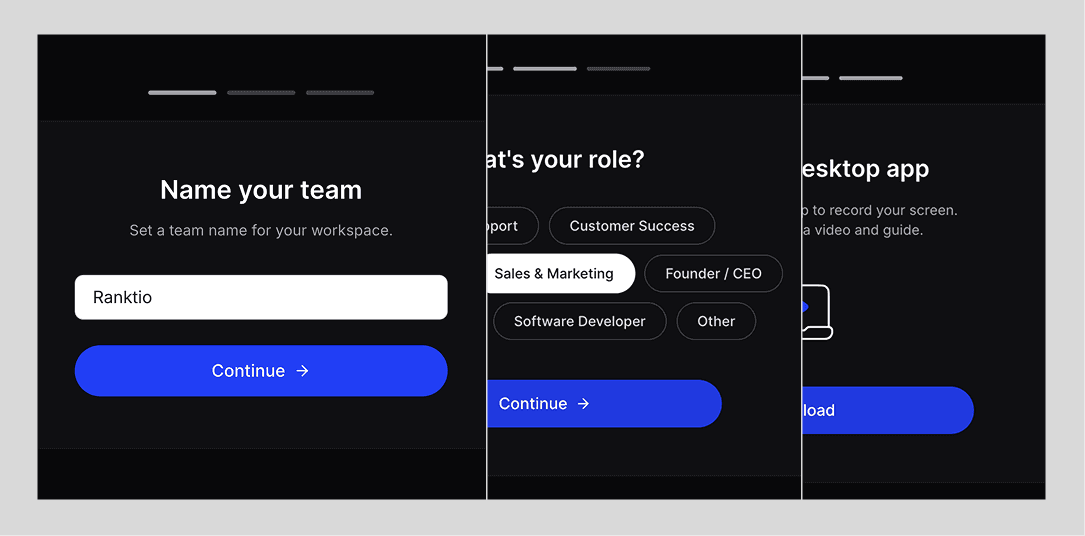
It has a 3-step setup. You name your workspace (your product name), select your role (founder), and then download the desktop app for recording. And you’re set!
Clevera will then write a step-by-step article of your product demo. You can optimize it for SEO and publish it as a blog post that can rank on search engines or share it as a help guide. Your demo can be embedded on your website, popular help centers, and documentation tools.
Use the comment section to engage and promote
If you’re active in the Vibe coding communities, you have probably heard of this before, especially on Reddit. But it’s more than that.
Your audiences are on different platforms, with signals pointing to the problems your product solves. By engaging in comments on these platforms, you’re selling to them warm.
Some platforms that particularly work are:
Reddit
LinkedIn
YouTube
X (formerly Twitter)
Instagram
Quora
A tool like SnitchFeed will help. Spend at least an hour on SnitchFeed daily. When you get an intent, follow up and answer their questions, then add and promote your product, which also solves their problem.
This can help you increase your product visibility to potential customers and also increase your appearance in AI answers.
Distribute across socials and co-promote
For TikTok, a short video (like an edited version of your value demo) is okay. On Facebook, Instagram, and LinkedIn, image carousels are effective. For X (formerly Twitter), you can repurpose your content into bite-sized posts or threads for sharing on it.
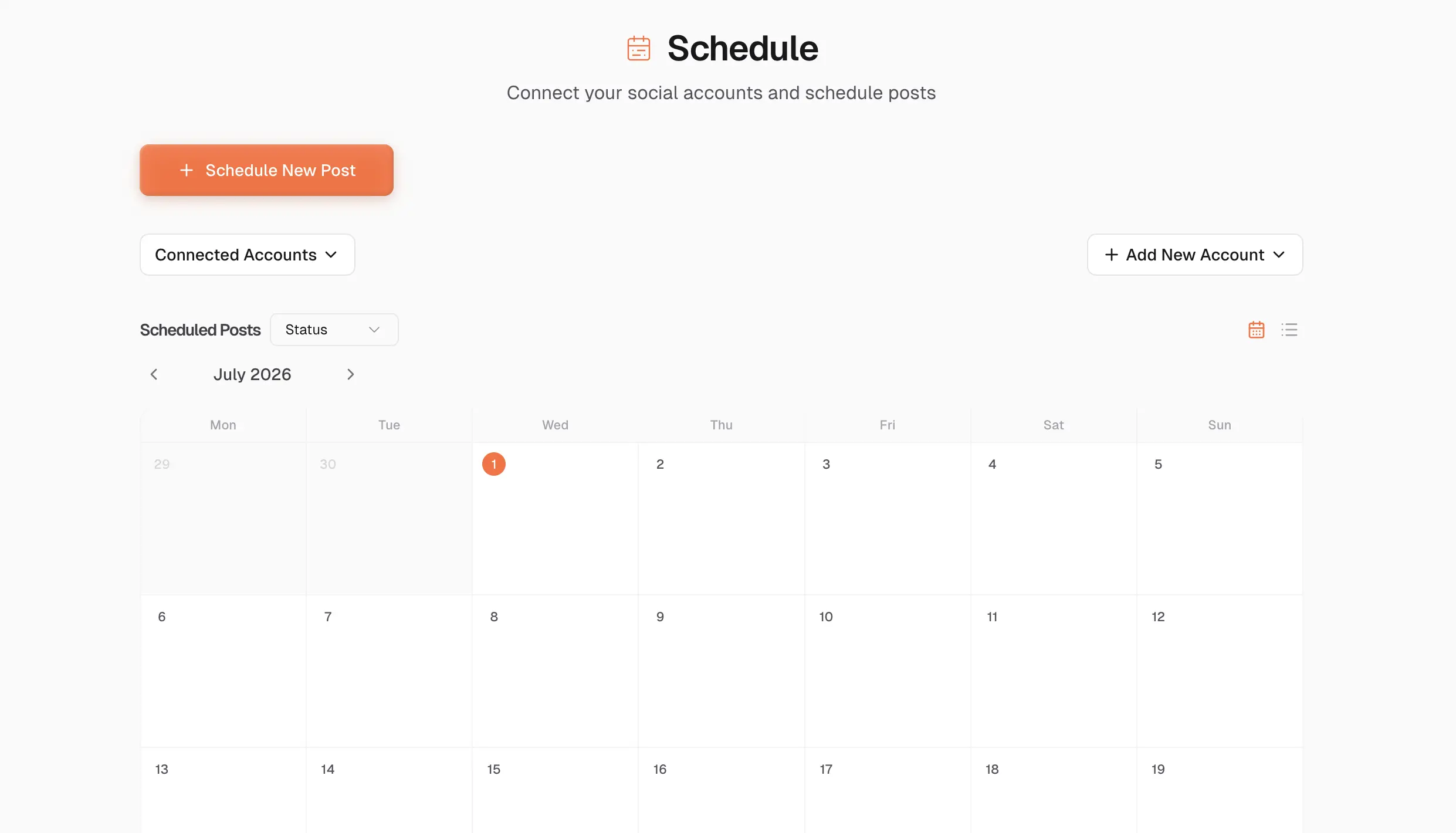
Use a tool like Xroad Studio to schedule and distribute your posts natively across all major social platforms.
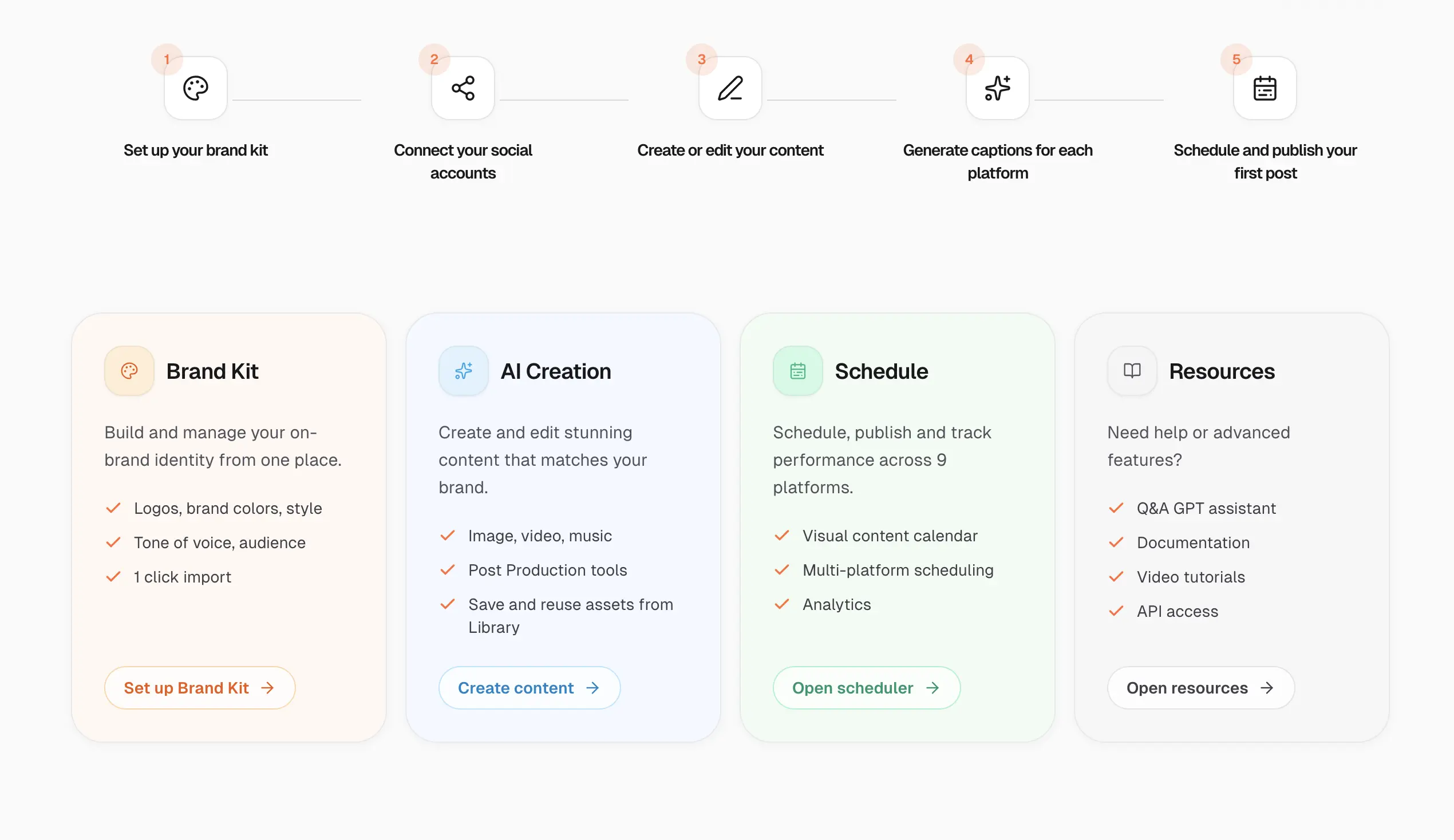
Xroad has been one of the important tools in my stack for a while now. You could build and manage your brand kit, AI content generation (generate image, video, music, and captions), virtual content calendar and multi-platform scheduling - almost a perfect feature suite for everything you need to stay competitive on social media.
Note: In all of these automations, your product story is important. Talk about the story behind the product, what made you build it. Update the public when you submit your app to the App Store, your first milestone in downloads, complaints, customer experience, and your behind-the-scenes.
Build something worthwhile
Everything you promote is downstream or a product that solves problems people have. That is why it is important to conduct audience research and the total addressable market.
Go outbound first while inbound compounds
The earliest stage of your promotion will be outbound. You have a very small (or zero) authority at all when you’re just starting. Everything you’ll build for the next few months or even years of starting will be outbound.
This might mean email outreach, crowdsourcing mentions (more on this on #12), or social outreach. You need to develop a mindset of outbound, at least for a few years, before results become inbound.
Content is more important than before
There are two ways things get discovered online. One is audiences searching for what they need, and the other is you taking it to them.
Content is more sustainable and scalable than the latter. However, it is very slow and time-consuming.
By developing a content playbook, you’re positioning your product to be discoverable when audiences search. This puts you up there alongside other big brands in your niche.
Content is the biggest asset that makes you discoverable across any search box.
Target a market that’s mostly out of the AI bubble
When you target a popular niche, suppose video creation, you’ll have to fight to rank against the giants in your industry and small competitors.
You can bypass the competition as a whole.
Consider the competition for any of these:
An AI company summarizer for healthcare presidents.
An AI tool that looks into all your company ops over the day, week, and month, and creates a meaningful summary for the company.
Or, an AI app that creates investor updates for newly IPO companies, or serves churches.
Across all of these ideas, the competition in those spaces is relatively small compared to others where vibe coding is more popular.
P.S. None of the ideas shared above has been created with any big competition.
Serve unorthodox markets
Similar to the previously mentioned are the unorthodox markets. Some markets are free from the AI bubble, but some are aware of it, with little to no AI penetration in their operations, mostly because they’re unorthodox.
Targeting this type of market gives you a competitive edge across all marketing boards.
Here’s a list of unorthodox markets and examples of vibe-coded apps making decent money serving them are listed here.
Veterinary niche
Tattoo studios and parlours
Agriculture and livestock
Faith and religious organizations
Note: Here’s a full list of some unorthodox markets to penetrate and examples of solo-founded and vibe-coded tools changing the narratives over there.
Reduce your token usage and explore paid PPC ads
Marketing doesn’t always mean organic. If you have the budget, we’d advise running some PPC ads on popular social platforms that you know your audiences hang out the most.
Use audience segments to create money pages.
Break down every audience category that your app serves and every use case of your app. Then create a landing page for each of them.
Suppose you have an audio enhancer app called Xound. Your audience category would be the people you serve across different categories, like podcasters, YouTubers, video producers, audio engineers, audiobook creators, etc.
A landing page for each of these would be something like:
AI audio enhancer for podcasters
Audio cleaner for YouTubers
Video audio enhancer
AI co-pilot for audio engineers
The goal is to increase your surface area of visibility across all your audience categories.
For the use cases, an audio enhancer app can also enhance video sound quality, fix audio normalization, fix audio reverb, AI audio enhancer, AI podcast enhancer, video sound enhancer, audiobook sound enhancer, audio clearing, reverb reduction, background noise removal, etc.
Each of these use cases can then become a landing on its own. You can then build some backlinks to each of the pages and watch the visibility on Google and other search engines grow. You can learn more about building backlinks here.
When you see it from such a lens, you get a broader scope of your tool, the people it can serve, and how wide your total addressable market (TAM) is.
Always compare yourself with everyone out there.
Have you one-shot Claude to create a new Zoom alternative? Compare how your tool is better than Zoom and publish it.
Create pages on your website that are specifically tailored for this. These pages are algorithmically targeted to get promote your product in the eye of different search engine algorithms and AI search.
This remains one of the best ways to signal to the world out there what your product is about.
Crowdsource and quote experts
Crowdsourced posts get your feet in the door of your industry.
Suppose you create a post featuring advice from the 30 biggest influencers in your industry. You can reach out to them before the post goes live to give a heads-up about your crowdsourced post.
When the post goes live, you can then reach out to them with the live link and ask them to share.
For a small vibe coder, you can target some fairly well-known names in the industry instead of the big ones who have been overly quoted. This way, their response rate and reciprocity to being featured would be more than crowdsourcing around popular names.
Use EMDs that reflect the whole industry
EMDs are exact match domains. Pick domain names that accurately reflect what your tool is about. If you’re lucky enough, you can get one that spells word-for-word what your tool does.
This is partially important for your SEO because search engines can pinpoint what your tool is about. Although unproven with data, we have seen some evidence that this works.
Some examples are of top-ranking domain names with little to zero SEO efforts and getting ranked higher on search because of their choice of domain name. audioenhancer.ai, voice.ai, videoeditor.com, etc.
Marketing is your job
You are not just a founder building a product; you’re also a marketer. A lot of vibe coders only think their job is to build features, while any marketing activity is seen as “hard”.
Because you’re used to Claude or Codex doing the heavy lifting for you on building, you don’t know that marketing can be hard. Ranktio makes it easy. But you should allocate about an hour or two daily for marketing work for your product. Pick one or two from the list and grind with them for an hour daily, and see the results compound.
Implement your distribution strategies for your vibe-coded apps
Put what you have learnt into practice and implement it for your app.
Make use of important tools to make your distribution easier and more refined while you focus on the creative side of things. Anything that can be automated should be automated. Free up your time.
Stay creative and keep building.
Only a few inventions since the advent of the internet have gone viral as vibe-coding. The gap between an idea and creation is now at zero.
You have shipped, now what?
How do you make people see what you built?
In a world of plenty, where everyone can create, the only moat is distribution.
In this guide, I’ll walk you through how to promote your vibe-coded apps in ways that matter to the internet age we are in (ditch the old methods and adopt the new playbook that's working right now).
PS. It doesn’t matter if you’re building in public or in private, have a thousand true fans, or you’re not on social media at all. One of the points mentioned in this guide will serve you right.
Create a value demo
Your demo is where people get a glimpse of your tool.
Many use talking head videos or interactive layouts to talk about what their tool is about. While this is not bad, it can be improved by creating a value-driven demo.
To a value demo, you have to start with mapping out the value your product delivers in the context of their problem, not a generic feature walkthrough. The audiences show be able to develop a mental snap that concludes your product will work for them instead of “just watching a demo.”
Create a small script to demonstrate the value of your tool, and use Clevera to record how your product works naturally.
The “value” here is how the AI updates your recorded video into a polished product video. It identifies mistakes and inconsistencies and generates a voiceover for your product walkthrough.
It has a 3-step setup. You name your workspace (your product name), select your role (founder), and then download the desktop app for recording. And you’re set!
Clevera will then write a step-by-step article of your product demo. You can optimize it for SEO and publish it as a blog post that can rank on search engines or share it as a help guide. Your demo can be embedded on your website, popular help centers, and documentation tools.
Use the comment section to engage and promote
If you’re active in the Vibe coding communities, you have probably heard of this before, especially on Reddit. But it’s more than that.
Your audiences are on different platforms, with signals pointing to the problems your product solves. By engaging in comments on these platforms, you’re selling to them warm.
Some platforms that particularly work are:
Reddit
LinkedIn
YouTube
X (formerly Twitter)
Instagram
Quora
A tool like SnitchFeed will help. Spend at least an hour on SnitchFeed daily. When you get an intent, follow up and answer their questions, then add and promote your product, which also solves their problem.
This can help you increase your product visibility to potential customers and also increase your appearance in AI answers.
Distribute across socials and co-promote
For TikTok, a short video (like an edited version of your value demo) is okay. On Facebook, Instagram, and LinkedIn, image carousels are effective. For X (formerly Twitter), you can repurpose your content into bite-sized posts or threads for sharing on it.
Use a tool like Xroad Studio to schedule and distribute your posts natively across all major social platforms.
Xroad has been one of the important tools in my stack for a while now. You could build and manage your brand kit, AI content generation (generate image, video, music, and captions), virtual content calendar and multi-platform scheduling - almost a perfect feature suite for everything you need to stay competitive on social media.
Note: In all of these automations, your product story is important. Talk about the story behind the product, what made you build it. Update the public when you submit your app to the App Store, your first milestone in downloads, complaints, customer experience, and your behind-the-scenes.
Build something worthwhile
Everything you promote is downstream or a product that solves problems people have. That is why it is important to conduct audience research and the total addressable market.
Go outbound first while inbound compounds
The earliest stage of your promotion will be outbound. You have a very small (or zero) authority at all when you’re just starting. Everything you’ll build for the next few months or even years of starting will be outbound.
This might mean email outreach, crowdsourcing mentions (more on this on #12), or social outreach. You need to develop a mindset of outbound, at least for a few years, before results become inbound.
Content is more important than before
There are two ways things get discovered online. One is audiences searching for what they need, and the other is you taking it to them.
Content is more sustainable and scalable than the latter. However, it is very slow and time-consuming.
By developing a content playbook, you’re positioning your product to be discoverable when audiences search. This puts you up there alongside other big brands in your niche.
Content is the biggest asset that makes you discoverable across any search box.
Target a market that’s mostly out of the AI bubble
When you target a popular niche, suppose video creation, you’ll have to fight to rank against the giants in your industry and small competitors.
You can bypass the competition as a whole.
Consider the competition for any of these:
An AI company summarizer for healthcare presidents.
An AI tool that looks into all your company ops over the day, week, and month, and creates a meaningful summary for the company.
Or, an AI app that creates investor updates for newly IPO companies, or serves churches.
Across all of these ideas, the competition in those spaces is relatively small compared to others where vibe coding is more popular.
P.S. None of the ideas shared above has been created with any big competition.
Serve unorthodox markets
Similar to the previously mentioned are the unorthodox markets. Some markets are free from the AI bubble, but some are aware of it, with little to no AI penetration in their operations, mostly because they’re unorthodox.
Targeting this type of market gives you a competitive edge across all marketing boards.
Here’s a list of unorthodox markets and examples of vibe-coded apps making decent money serving them are listed here.
Veterinary niche
Tattoo studios and parlours
Agriculture and livestock
Faith and religious organizations
Note: Here’s a full list of some unorthodox markets to penetrate and examples of solo-founded and vibe-coded tools changing the narratives over there.
Reduce your token usage and explore paid PPC ads
Marketing doesn’t always mean organic. If you have the budget, we’d advise running some PPC ads on popular social platforms that you know your audiences hang out the most.
Use audience segments to create money pages.
Break down every audience category that your app serves and every use case of your app. Then create a landing page for each of them.
Suppose you have an audio enhancer app called Xound. Your audience category would be the people you serve across different categories, like podcasters, YouTubers, video producers, audio engineers, audiobook creators, etc.
A landing page for each of these would be something like:
AI audio enhancer for podcasters
Audio cleaner for YouTubers
Video audio enhancer
AI co-pilot for audio engineers
The goal is to increase your surface area of visibility across all your audience categories.
For the use cases, an audio enhancer app can also enhance video sound quality, fix audio normalization, fix audio reverb, AI audio enhancer, AI podcast enhancer, video sound enhancer, audiobook sound enhancer, audio clearing, reverb reduction, background noise removal, etc.
Each of these use cases can then become a landing on its own. You can then build some backlinks to each of the pages and watch the visibility on Google and other search engines grow. You can learn more about building backlinks here.
When you see it from such a lens, you get a broader scope of your tool, the people it can serve, and how wide your total addressable market (TAM) is.
Always compare yourself with everyone out there.
Have you one-shot Claude to create a new Zoom alternative? Compare how your tool is better than Zoom and publish it.
Create pages on your website that are specifically tailored for this. These pages are algorithmically targeted to get promote your product in the eye of different search engine algorithms and AI search.
This remains one of the best ways to signal to the world out there what your product is about.
Crowdsource and quote experts
Crowdsourced posts get your feet in the door of your industry.
Suppose you create a post featuring advice from the 30 biggest influencers in your industry. You can reach out to them before the post goes live to give a heads-up about your crowdsourced post.
When the post goes live, you can then reach out to them with the live link and ask them to share.
For a small vibe coder, you can target some fairly well-known names in the industry instead of the big ones who have been overly quoted. This way, their response rate and reciprocity to being featured would be more than crowdsourcing around popular names.
Use EMDs that reflect the whole industry
EMDs are exact match domains. Pick domain names that accurately reflect what your tool is about. If you’re lucky enough, you can get one that spells word-for-word what your tool does.
This is partially important for your SEO because search engines can pinpoint what your tool is about. Although unproven with data, we have seen some evidence that this works.
Some examples are of top-ranking domain names with little to zero SEO efforts and getting ranked higher on search because of their choice of domain name. audioenhancer.ai, voice.ai, videoeditor.com, etc.
Marketing is your job
You are not just a founder building a product; you’re also a marketer. A lot of vibe coders only think their job is to build features, while any marketing activity is seen as “hard”.
Because you’re used to Claude or Codex doing the heavy lifting for you on building, you don’t know that marketing can be hard. Ranktio makes it easy. But you should allocate about an hour or two daily for marketing work for your product. Pick one or two from the list and grind with them for an hour daily, and see the results compound.
Implement your distribution strategies for your vibe-coded apps
Put what you have learnt into practice and implement it for your app.
Make use of important tools to make your distribution easier and more refined while you focus on the creative side of things. Anything that can be automated should be automated. Free up your time.
Stay creative and keep building.